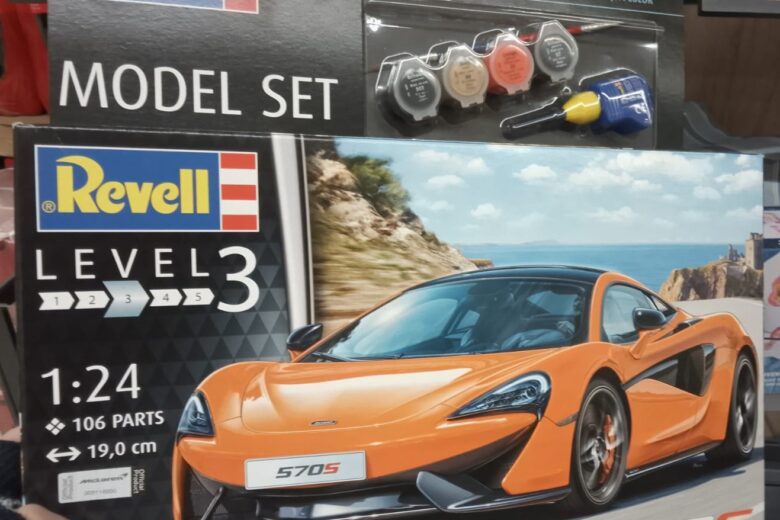
If you’ve ever walked down the model kit aisle of a hobby shop, chances are you’ve seen the Revell name staring back at you. For decades, Revell has been one of the most recognizable model companies in the world, building everything from classic aircraft and warships to cars, space subjects, and pop-culture icons. For many hobbyists, Revell isn’t just a brand—it’s part of their modeling journey.
Revell was founded in the United States in the 1940s, at a time when plastic modeling was just beginning to take shape as a hobby. Early on, Revell positioned itself as a company that could bring detailed, realistic models to everyday people. As injection-molded plastic improved, Revell quickly expanded its catalog and became a household name, especially in North America and Europe.
One of Revell’s defining strengths has always been variety. Few model companies cover as many subjects as Revell does. Aircraft builders can choose from WWII fighters, Cold War jets, and modern airliners. Ship modelers have everything from historic sailing ships to modern naval vessels. Car enthusiasts get classic muscle cars, European sports cars, and modern racers. Even science-fiction and space fans have Apollo rockets and Star Wars kits to explore.
Another key part of Revell’s identity is accessibility. Revell has always made an effort to cater to beginners as well as experienced modelers. Simpler kits with fewer parts are often clearly labeled, while more advanced releases offer high part counts, detailed cockpits, and complex assemblies. This makes Revell a common “first kit” for newcomers—and a familiar name hobbyists return to years later.
Over the years, Revell has gone through changes, mergers, and regional splits, most notably between Revell USA and Revell Germany. While this sometimes led to inconsistent quality in the past, it also expanded the company’s reach and subject selection. In recent years, Revell’s newer toolings—especially from the European side—have shown improved fit, sharper detail, and more modern engineering.
Revell kits are also popular with builders who enjoy customization. Many of their models serve as solid canvases for detailing, weathering, and aftermarket upgrades. Whether you’re adding photo-etch, scratch-building details, or doing a full repaint, Revell kits often strike a balance between detail and affordability that makes experimentation less intimidating.
What really keeps Revell relevant, though, is its connection to nostalgia. Many builders remember Revell kits from childhood—simple boxes, bold artwork, and the excitement of opening a new model. Today, building a Revell kit can feel like reconnecting with that early joy, even as your skills and expectations have grown.
In the end, Revell is a company that has evolved alongside the hobby itself. It may not always be the flashiest or most cutting-edge brand, but it remains dependable, diverse, and deeply rooted in model-building culture. For beginners and veterans alike, Revell continues to prove that a classic name can still have a place on the modern workbench.
