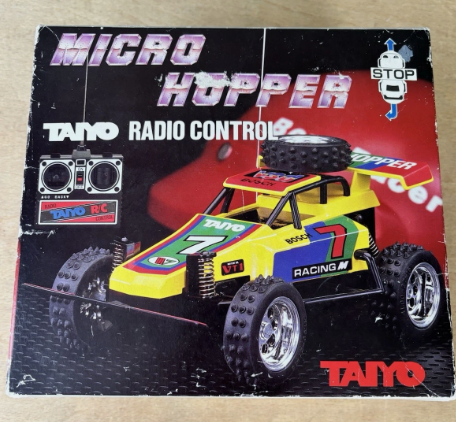
If you grew up in the 1980s or 1990s, there’s a good chance your first RC car didn’t come from a hobby shop. It probably came from a toy store, ran on AA batteries, and proudly wore a name like Taiyo or Tyco on the box. For many people, these brands were their introduction to radio-controlled cars—and for a while, they absolutely dominated the market. So what happened?
The Rise of Taiyo
Taiyo was one of the pioneers of mass-market RC cars. Based in Japan, the company became famous for making RC vehicles that were affordable, durable, and exciting at a time when hobby-grade RC was still expensive and niche. Taiyo cars weren’t about precision racing or tuning—they were about instant fun. You opened the box, put in batteries, and started driving.
Their designs were bold and memorable. Big tires, flashy decals, and exaggerated proportions made Taiyo cars look fast even when standing still. More importantly, they worked reliably for kids, which is no small achievement in early RC electronics. Taiyo essentially proved that RC cars could be a mainstream toy, not just a specialist hobby.
Enter Tyco and the Boom Years
In the late 1980s, Taiyo partnered with—or more accurately, licensed its designs to—Tyco, a major American toy company. In the US and several other markets, Taiyo RC cars were sold under the Tyco RC brand. This move was huge. Tyco had massive distribution power, and suddenly RC cars were everywhere.
This was the golden age of Tyco RC. Models like the Tyco Turbo Hopper, Fast Traxx, and Bandit became household names. Tyco pushed innovation within the toy-grade space, introducing features like turbo boost buttons, oversized wheels, and even early attempts at proportional steering. These cars weren’t hobby-grade, but they felt advanced compared to anything else on toy store shelves.
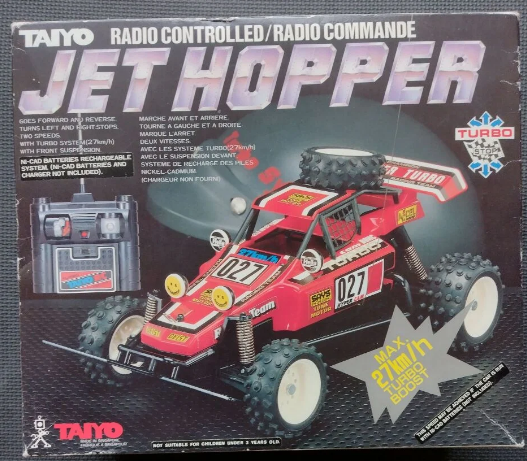
For a whole generation, Tyco RC was RC.
The Shift in the RC Market
The problem was that the RC world didn’t stand still. By the late 1990s and early 2000s, hobby-grade RC technology became more affordable and visible. Proportional controls, replaceable batteries, standardized electronics, and upgrade paths started to trickle down in price. Suddenly, serious RC performance wasn’t locked behind specialty shops anymore.
At the same time, consumer expectations changed. Kids—and parents—started noticing that toy-grade RC cars were disposable. When something broke, you usually couldn’t fix it. Hobby-grade brands offered repairability, upgrades, and better performance, and that began to pull enthusiasts away from toy-grade systems.
What Happened to Taiyo and Tyco?
Taiyo eventually faded from prominence in the RC world, shifting focus and losing visibility as competition increased. Tyco RC continued for a while, but the brand gradually moved away from innovation and toward cheaper, simpler toys. As margins tightened, RC cars became just one category among many, rather than a flagship product.
Eventually, Tyco as a company changed hands, and the RC line lost the identity that once made it special. The bold designs and ambitious features that defined classic Tyco RC gave way to more generic offerings, and the brand slowly disappeared from the RC spotlight.
The Legacy They Left Behind
Even though Taiyo and Tyco no longer dominate RC shelves, their impact is still felt. They were the gateway into RC for millions of people. Many hobby-grade RC enthusiasts today trace their passion back to a Tyco or Taiyo car they drove as a kid on the driveway or living room floor.
Collectors now hunt down vintage Taiyo and Tyco RC cars, restoring them or displaying them as icons of a simpler era. They represent a time when RC was magical, noisy, and just a little bit wild—long before specs, telemetry, and firmware updates entered the picture.
In the end, Taiyo and Tyco didn’t fail so much as they were overtaken by progress. They did exactly what they were meant to do: bring RC to the masses. And for that, they’ll always hold a special place in RC history.
