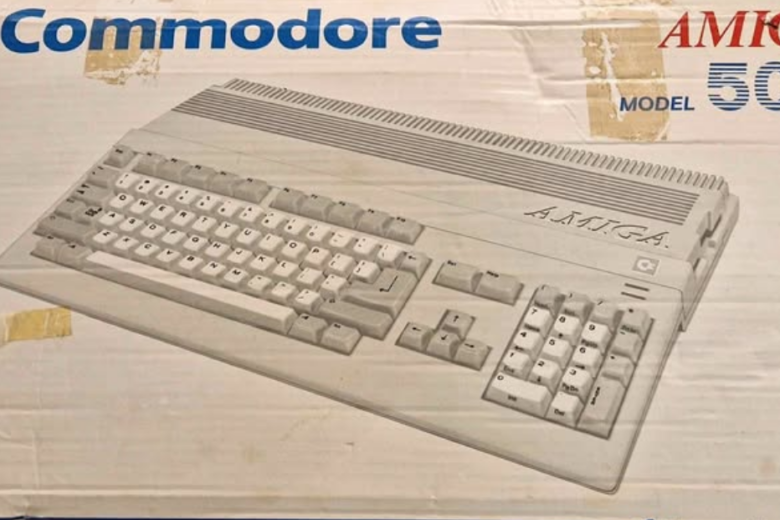
For many people who grew up in the late 1980s and early 1990s, the Amiga A500 wasn’t just a computer—it was an experience. At a time when most home computers were limited to basic graphics and beeps, the Amiga A500 felt like something from the future. Games looked better, music sounded richer, and creative possibilities seemed endless.
Released by Commodore in 1987, the Amiga A500 hit a perfect sweet spot. It was powerful enough to impress, affordable enough for homes and bedrooms, and flexible enough to be used for gaming, music, art, and even early video work. While other machines excelled at one thing, the Amiga felt like it could do everything.
What really set the A500 apart was its custom chipset. Dedicated chips handled graphics, sound, and multitasking, freeing up the CPU and delivering performance that competitors struggled to match. Smooth scrolling, colorful sprites, and stereo sound weren’t gimmicks—they were standard. Games felt arcade-like, demos were jaw-dropping, and the system became a playground for programmers and artists.
Speaking of games, the Amiga A500’s library is legendary. Titles like Shadow of the Beast, Lemmings, Turrican, Sensible Soccer, and The Secret of Monkey Island defined an era. These weren’t just good games for their time—they were cultural touchstones, often showcasing visuals and music that pushed the hardware to its limits. Many players still remember loading games from floppy disks and waiting patiently, knowing the payoff would be worth it.
But the A500 wasn’t only about games. It was a creative machine. Programs like Deluxe Paint turned bedrooms into art studios, while trackers like ProTracker helped launch entire music scenes. The Amiga became the heart of the demo scene, where coders, musicians, and graphic artists competed to squeeze impossible effects out of the hardware. This creative culture helped shape modern game development and digital art in ways that are still felt today.
Another standout feature was multitasking. The Amiga’s operating system allowed users to run multiple applications at once, something that felt almost magical at the time. Switching between tasks was smooth and intuitive, making the A500 feel more like a professional workstation than a home computer.
Of course, the Amiga A500’s story is also tinged with a bit of sadness. Commodore’s mismanagement and failure to fully capitalize on the Amiga’s potential eventually led to the platform’s decline. Yet despite that, the A500’s legacy never faded. Emulators, hardware recreations, and an active retro community have kept the machine alive decades later.
Today, the Amiga A500 is remembered not just for its specs, but for how it made people feel. It inspired creativity, rewarded curiosity, and proved that home computers could be fun, powerful, and expressive all at once. For those who lived through its era—and for many who discovered it later—the Amiga A500 remains one of the most beloved computers ever made.
