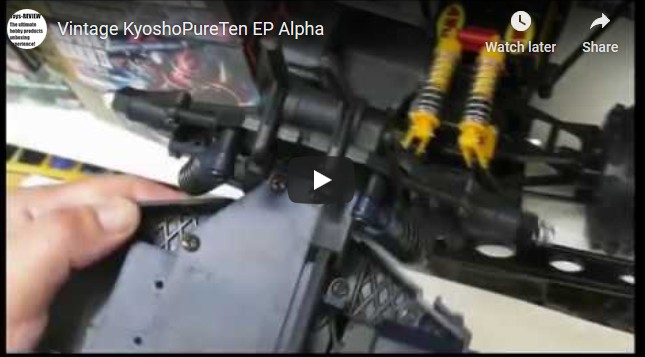
Vintage Kyosho PureTen EP Alpha. Belt drive EP 4WD.
The Kyosho PureTen Alpha series represents a fascinating and somewhat overlooked chapter in the history of 1/10 scale radio-controlled cars, a range of vehicles that Kyosho introduced at the turn of the millennium to offer accessible, ready‑to‑run fun for a new generation of hobbyists who were just discovering the joys of remote‑controlled driving. Unveiled in the year 2000, the PureTen Alpha line was a departure for Kyosho, designed not as a complex kit for seasoned racers who relished the challenge of assembly and tuning, but as a completely assembled and painted ready‑to‑run model that could be enjoyed straight out of the box, removing the barriers of entry that had traditionally separated beginners from the hobby. Available in both electric and nitro flavours, the Alpha series aimed to capture the growing market for affordable, entry‑level touring and rally cars, and it did so with a distinctive character and a variety of bodyshell options that have since earned it a dedicated, if niche, following among vintage RC collectors who appreciate its place in the brand’s broader history.
The electric version, known as the PureTen EP Alpha, was built around a robust moulded plastic bathtub chassis that featured four‑wheel independent suspension with short lower A‑arms and fixed camber links, a setup that provided predictable handling for novice drivers learning the ropes of radio‑controlled driving. Power came from a rear‑mounted 540 motor, which drove a three‑gear transmission and a sealed bevel‑gear differential at the rear, and from there, a ribbed belt stretched forward past a tension adjuster to drive a second sealed differential at the front, creating a full‑time four‑wheel‑drive system that offered excellent traction and stability on a variety of surfaces. The suspension was handled by coil‑over plastic friction shocks, which were basic but effective for the car’s intended purpose, and the car came with dogbone drive‑shafts, ring‑type bearings, and a Prefex radio system that provided reliable control without the complexity of more expensive aftermarket equipment. The electric Alpha was available in several popular bodyshell options, including the Subaru Impreza, the Peugeot 206, and the Ford Focus, making it an instantly appealing choice for fans of contemporary rally and touring car racing who wanted to recreate the excitement of the real‑world motorsport they watched on television.
The nitro‑powered PureTen GP Alpha, on the other hand, presented a very different mechanical character that appealed to those who craved the noise, smell, and visceral thrill of a combustion engine. Instead of a plastic tub, it featured a stamped aluminium chassis that resembled Kyosho’s more expensive Inferno buggies, complete with eight degrees of front kickup and raised side rails, giving it a more serious, competition‑oriented appearance despite its entry‑level positioning. The suspension was shared with the electric version, but the drivetrain was a shaft‑driven system rather than belt‑driven, a more robust setup for the increased power and vibration of a nitro engine that could withstand the stresses of higher speeds and rougher terrain. At its heart was a mid‑ship mounted GX‑12 engine with a recoil starter, which provided a thrilling, visceral experience for drivers new to the world of glow‑plug engines, offering the kind of mechanical engagement that electric motors simply could not replicate. The GP Alpha was also offered with the same trio of bodyshells as its electric sibling, allowing customers to choose their preferred racing livery regardless of the power source they selected.
The PureTen Alpha line did not remain static, and Kyosho released several updated versions over the following years to keep the series fresh and competitive in a rapidly evolving market. The Alpha 2 appeared in 2002, and the Alpha 3 followed in 2003, both available in electric and nitro forms, and these later models expanded the bodyshell options considerably, offering a diverse range that included the Honda S2000, the Dodge Ram, the Vauxhall Astra, the Mercedes CLK DTM, the Alfa Romeo 156 GTA, and even the Chevrolet Corvette C5‑R, giving buyers an unprecedented level of choice for an entry‑level ready‑to‑run car. The Alpha 3, for instance, retained the alloy plate chassis and shaft‑driven four‑wheel‑drive system of its predecessor, but the wider range of bodies suggests that Kyosho was keen to keep the series appealing to a broad audience by offering something for every taste, from touring car enthusiasts to fans of American muscle and European touring cars. Despite its accessibility and variety, however, the PureTen Alpha series was not a runaway success, and as one enthusiast noted on a vintage RC forum, the Pure Ten Alpha cars were not very popular, at least compared to other inexpensive entry‑level touring cars of the era, and the chassis didn’t seem to have the same level of refinement or parts support as some of its competitors from Tamiya or HPI.
This relative obscurity has, in a way, added to its charm for collectors today, as finding one in good condition is a genuine treasure hunt that requires patience and a keen eye for vintage RC listings. Restoring an old Alpha, whether by fitting modern electronics to the electric version or bringing a tired nitro engine back to life with careful cleaning and tuning, has become a rewarding project for those who appreciate the quirks and character of early 2000s RC design, a time when manufacturers were experimenting with new ways to make the hobby more accessible without sacrificing the core principles of performance and durability. The Kyosho PureTen Alpha remains a fascinating time capsule, a snapshot of an era when Kyosho was striving to make the thrill of four‑wheel‑drive RC accessible to everyone, and its enduring appeal lies in that very spirit of uncomplicated, ready‑to‑run fun that captured the imagination of a generation of young drivers. For collectors and enthusiasts who remember the excitement of unboxing their first ready‑to‑run car, or for those discovering the model for the first time, the PureTen Alpha offers a tangible connection to a pivotal moment in RC history, a time when the boundaries between toy and hobby were blurring and the joy of driving was the only thing that truly mattered.
