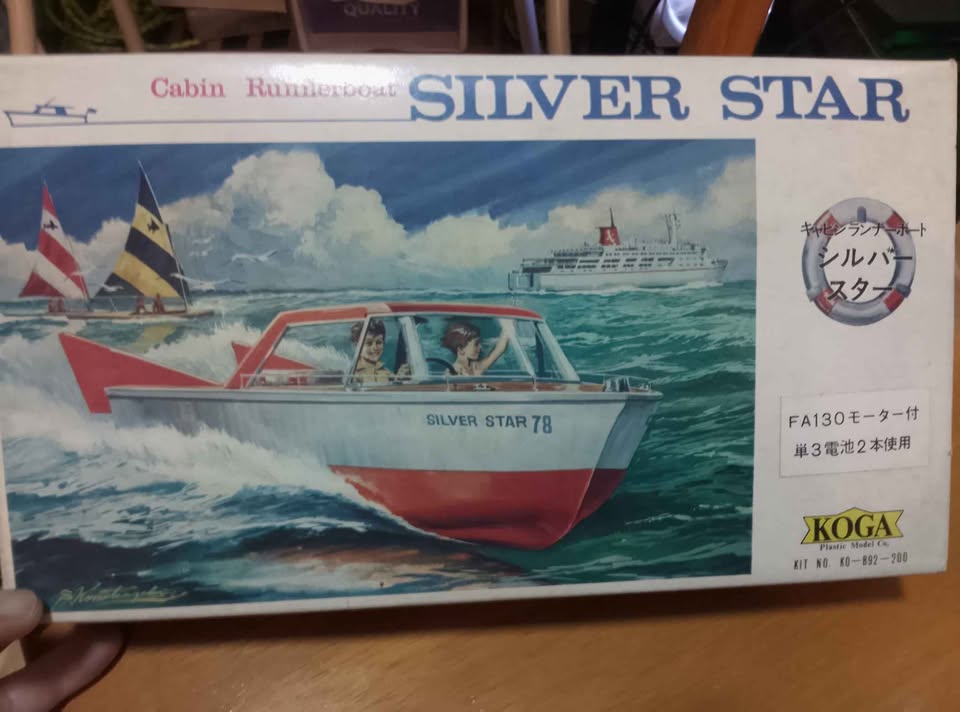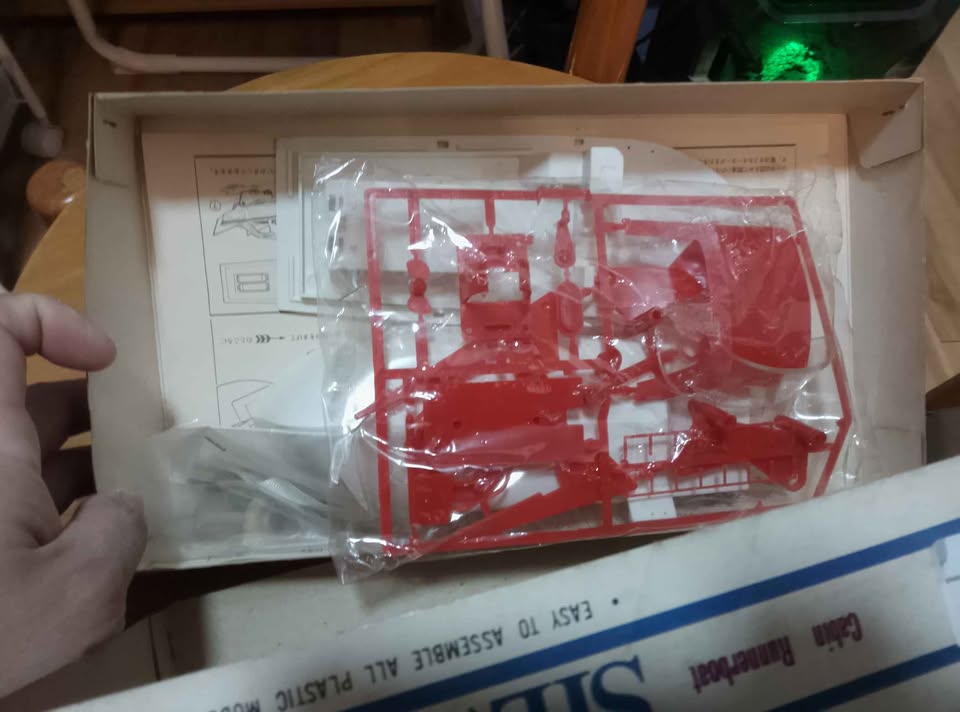
There’s a certain stillness that falls over you when you hold a vintage plastic model kit box in your hands. It’s heavier than it looks, not just because of the plastic sprues inside, but because of the weight of time it carries. The box art, perhaps a fighter plane banking over a Pacific island or a samurai on horseback, is faded at the edges, the colours shifted slightly toward magenta after decades on a shelf. And when you slide out the instructions, yellowed and creased, you’re not just holding paper. You’re holding a promise made to a child decades ago, a promise of hours of quiet concentration and the pride of creating something with your own hands. For those who collect vintage Japanese plastic model kits, this is the heart of the matter. It’s about reclaiming a piece of a slower, more deliberate time, when entertainment came in a cardboard box and required glue, paint, and patience.
The story of Japanese plastic models begins in the ashes of the postwar era. Companies like Tamiya started as woodworking shops, crafting wooden educational toys before embracing the new technology of injection-molded plastic. By the late 1950s and through the 1960s, pioneers were producing kits that are now incredibly rare and collectible, tiny aircraft in unusual scales packaged in colorful boxes that allowed you to see the sprues inside. These early kits had a charm all their own. They weren’t just about historical accuracy; they were about imagination. They included everything from motorized battleships and submarines to handgun models that actually fired plastic bullets, reflecting a playful, experimental spirit that defined Japan’s emergence as a modeling powerhouse. But it was the 1970s and 1980s that many consider the true golden era. This was the age of Tamiya’s military miniature series, featuring exquisite box art by artists that were miniature masterpieces in their own right. It was also the dawn of the character model boom, sparked by anime, which transformed the hobby and laid the groundwork for the giant robot craze that would follow.
For collectors today, the fun begins with the search. It might be a long-sought-after Tamiya military vehicle from the 1970s, its box showing the gentle patina of shelf wear. It could be a quirky race car from the 1980s, a caricature-style model with cartoonish proportions that screams bubble-era Japan. Or perhaps it’s something truly rare, like an unassembled mecha kit from a cult television show, still sealed in its bag after forty years, waiting to be rediscovered. The hunt takes you to online auctions, dusty hobby shop basements, and flea markets. You learn to recognize the logos of defunct companies, to appreciate the significance of a particular box design, and to feel that electric thrill when you find a kit you thought existed only in faded catalogue photographs.
But finding the kit is only the beginning. Unlike toys that roar back to life, a plastic model kit presents a different kind of challenge. Many collectors are faced with a dilemma: build it or preserve it? Some kits are simply too rare and valuable to assemble, remaining as time capsules in their original boxes. Others, however, call out to be built, to fulfill the purpose for which they were created. This is where the real craftsmanship comes in. Restoring a vintage model often means dealing with fragile, yellowed plastic and decals that have become brittle with age. For those missing parts, the challenge intensifies. Skilled restorers become detectives, studying photographs, measuring proportions, and using modern techniques to fabricate replacements that are faithful to the original. They might map out a missing fairing and sculpt it with epoxy putty, or heat-form a clear windshield from acetate sheet. It is painstaking work, requiring the patience of a surgeon and the dedication of a historian. There is a profound satisfaction in holding a completed model, knowing that a piece of it was brought back from nothing by your own hands.
This passion is far from solitary. Around the world, a vibrant community of enthusiasts shares this love for vintage Japanese plastic. Online forums buzz with discussions about the best ways to restore a paper kit or the thrill of finally locating a long out-of-production model. Modelers document their builds in meticulous detail, sharing tips on glues, paints, and techniques that bring old kits back to their former glory. Publications cater specifically to this generation of modelers, featuring deep dives into the classic kits of the 1970s and 80s that defined their youth. There are even reference books dedicated to the care and maintenance of vintage models, complete with exploded photos that reveal the inner workings of cherished old kits. This shared knowledge ensures that the skills and the stories are passed down, keeping the spirit of the golden age alive.
For those who prefer not to risk building an irreplaceable original, there is wonderful news. Manufacturers have recognized the deep well of nostalgia among middle-aged hobbyists. Classic kits are frequently reissued from their vast back catalogues, allowing a new generation, and the old generation, to experience the joy of building a piece of history with fresh plastic. There is something magical about sitting at your hobby table with a newly manufactured kit that is identical to the one you built as a child. The sprues are crisp, the decals are fresh, but the experience connects you directly to your ten-year-old self. You slow down, you follow the steps, and for a few hours, the world outside fades away.
Ultimately, collecting vintage Japanese plastic model kits is about more than accumulating plastic. It is about preserving the artistry of a bygone era, the illustrated box covers that hung on bedroom walls like posters, the ingenious engineering of those early molds, the sheer breadth of subjects that reflected a nation’s boundless curiosity. It is about the stories each kit carries: the child who saved their pocket money, the hobbyist who carefully painted every detail, the decades the box spent waiting on a shelf. For some, it is finally completing the collection they dreamed of as a kid. For others, it is the meditative process of restoration, the quiet focus that heals a busy mind. And for many, it is the camaraderie of a community that understands why a faded box of plastic sprues can bring tears to your eyes. So whether you are digging through an old closet at your parents’ house or patiently watching auction listings, keep an eye out for those vintage kits. They are more than old toys. They are frozen moments in time, waiting for someone to bring them home. And when you finally hold that completed model on your palm, you are holding a little piece of your past, made whole again.